North Indian and South Indian weddings are both rich in tradition, but their rituals, clothing, food, music and celebrations can feel very different. From a lively baraat and evening festivities to an early-morning muhurtham and traditional music, each region has its own unique charm. This guide explores the key differences and what to expect as a guest, couple or family.
A Note on Regional Traditions
“North” and “South” are broad terms, not strict categories. Wedding traditions vary widely across communities and families. Use this guide as a general overview, and when in doubt, ask the family about their specific customs.
North Indian Wedding Traditions: What to Expect
North Indian wedding traditions are known for scale, colour and celebration. The festivities often stretch over several days, and almost every event has music, dancing and plenty of food.
The pre-wedding events
The wedding day
After the ceremony
The bride's farewell, the vidaai, is one of the most emotional moments, followed by her welcome into her new home, the griha pravesh. Many families then host a reception with dinner, speeches and music.
South Indian Wedding Traditions: What to Expect
South Indian wedding traditions tend to be more focused on the rituals themselves. Ceremonies are often held in the morning, guided by the muhurtham, the auspicious time chosen by a priest. The mood is calm, devotional and beautifully structured.
The pre-wedding events
The wedding day
The Difference Between North vs South Indian Wedding Rituals
These are common patterns and not fixed rules.
| North Indian | South Indian |
Timing | Often evening and late night | Often early morning, guided by the muhurtham |
Atmosphere | Loud, festive | Calm, devotional, ritual-focused |
Duration | Multi-day celebrations | Usually more compact, with a focused main ceremony |
Groom's entry | Baraat with dhol and dancing | Welcomed by the bride’s family as part of the wedding ceremony. |
Central moment | Pheras around the sacred fire | Tying of the thali or mangalsutra |
Bride's attire | Red, pink or gold lehenga or saree | Silk saree, often Kanjeevaram, with gold and temple jewellery |
Groom's attire | Sherwani, turban or safa | Silk veshti or dhoti with an angavastram |
Music | Dhol, DJ, Bollywood songs | Nadaswaram and thavil |
Food | Buffet with tandoor items, chaat, rich curries and sweets | Traditional vegetarian meal served on a banana leaf |
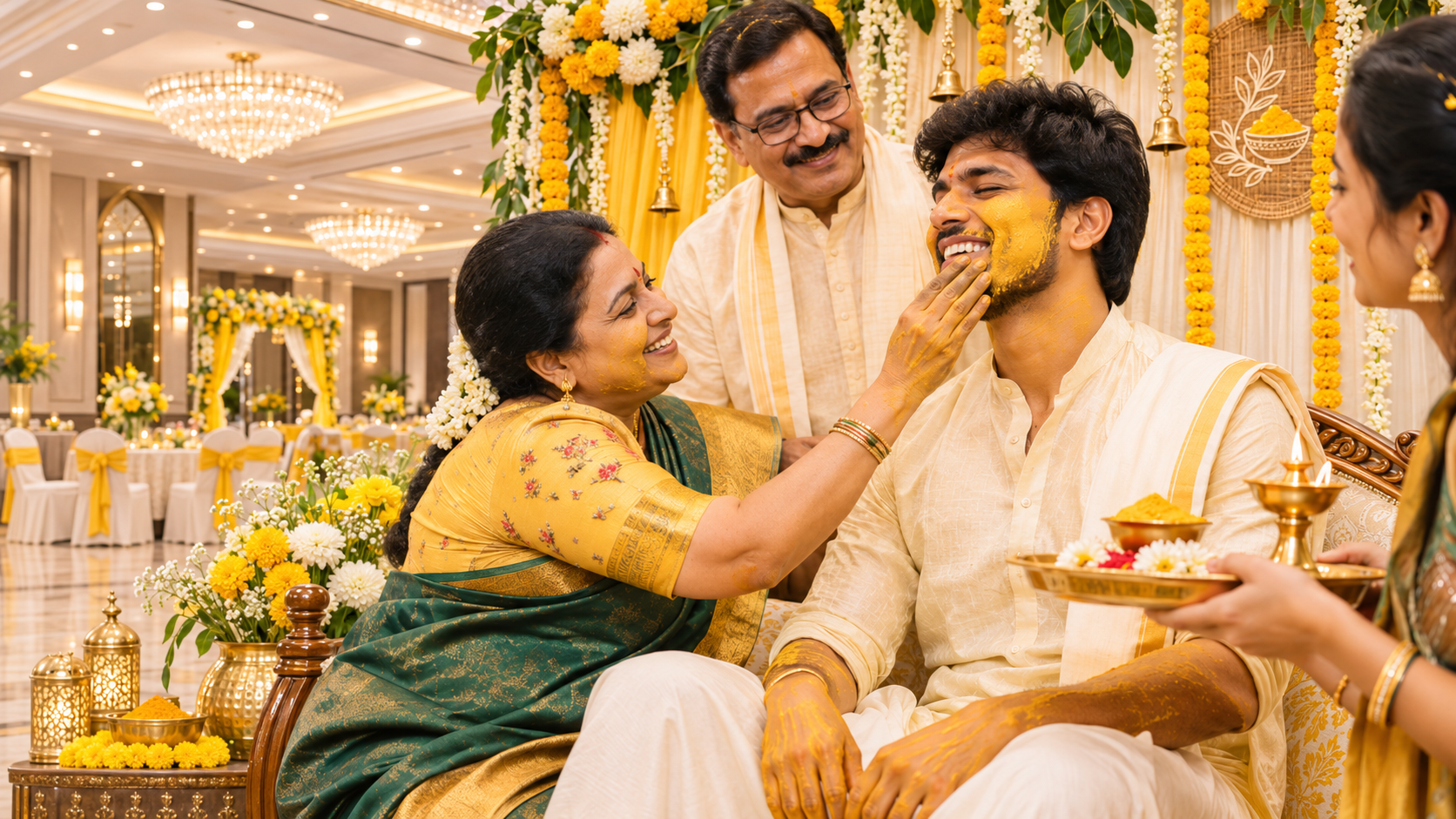
Pre-wedding events | Mehendi, sangeet, haldi | Turmeric ceremonies, engagement, family rituals |
The Differences Explained
→The timing
A North Indian wedding can run late into the night, with pheras happening after midnight. A South Indian wedding usually follows the muhurtham, which often falls in the early morning, so guests arrive early and the day ends sooner.
→The groom's arrival
In the North, the baraat is a show. Friends and relatives dance through the street, and the groom often arrives on a horse. In the South, the groom is usually welcomed at the wedding venue with a more traditional reception, and in some communities the playful Kashi Yatra takes centre stage.
→The main ritual
Both traditions include a sacred fire and the seven vows, the saptapadi. But the spotlight moves. In the North, the pheras around the fire are the focal point. In the South, the moment everyone waits for is the tying of the thali or mangalsutra.
→What everyone wears
North Indian brides often choose heavy embroidered lehengas in red, pink or gold, while grooms wear sherwanis and turbans. In the South, brides typically wear silk sarees, often in rich reds, golds or greens, with jasmine flowers in their hair and temple jewellery. Grooms wear a silk veshti with an angavastram.
→The food
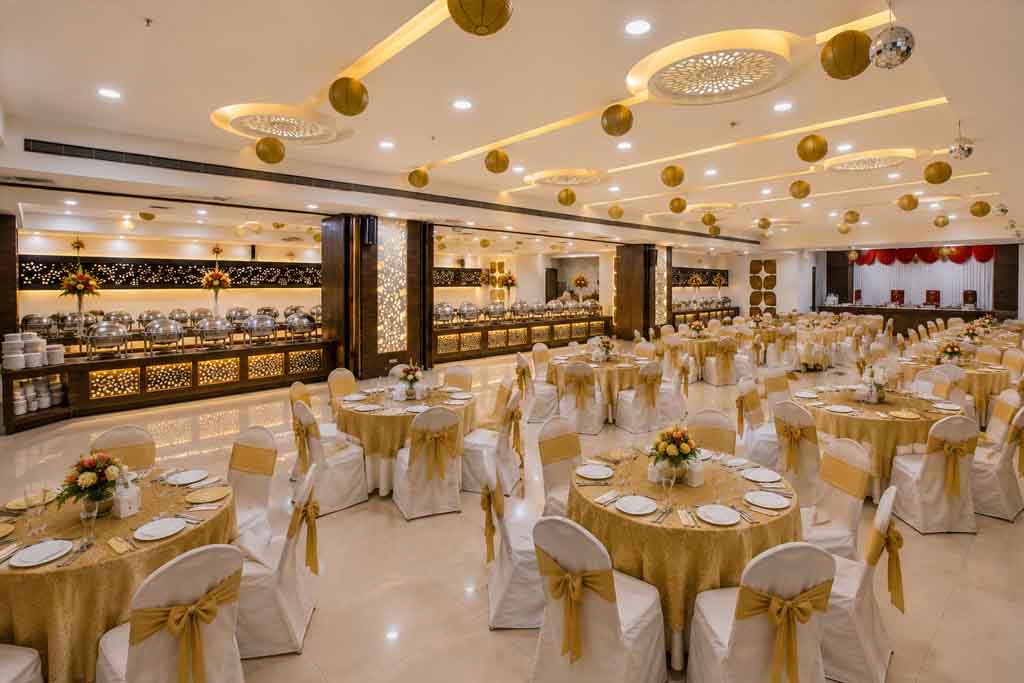
North Indian weddings are famous for lavish buffets with live counters, chaat, dal, paneer dishes, breads and desserts. South Indian weddings traditionally serve a vegetarian feast on a banana leaf, with rice, sambar, rasam, curries, payasam and much more, served course by course.
→Music and mood
A dhol beat and a DJ set the tone in the North. The nadaswaram and thavil create a sacred, festive feel in the South. Neither is better. They simply reflect different ways of celebrating.
What North and South Indian Weddings Have in Common
Despite the differences, Indian wedding traditions share a deep common thread:
Planning a Wedding That Blends Both Traditions
In cities like Hyderabad, where families from different regions often marry into each other, blended weddings are becoming more common. If you're planning one, a few simple ideas help:
Final Thoughts
The differences between North and South Indian weddings are distinct and reflect diverse cultural traditions.
One celebrates with drums and dance, the other with chants and silk. Both say the same thing: two families are coming together, and the community is invited to bless them.
Whether you're attending your first wedding of another tradition or planning your own, approach it with curiosity. Ask questions, learn the meaning behind each ritual and enjoy what makes every celebration unique.
FAQs
1. What is the main difference between North Indian and South Indian weddings?
The biggest difference is the mood and focus. North Indian weddings are usually large, lively, multi-day celebrations with a baraat and pheras, while South Indian weddings are typically more compact and ritual-centred, often held in the morning around the muhurtham and the tying of the thali.
2. What are the key North Indian wedding traditions?
Common North Indian wedding traditions include the roka, mehendi, sangeet, haldi, baraat, milni, jaimala, kanyadaan, pheras, sindoor, vidaai and the griha pravesh.
3. What are the key South Indian wedding traditions?
Typical South Indian wedding traditions include the nischayathartham, turmeric ceremonies, Kashi Yatra, oonjal, the thali or mangalsutra tying, the saptapadi and, in Telugu weddings, jeelakarra bellam and talambralu. Details vary by community.
4. Do North and South Indian weddings both have a sacred fire?
Yes, in most Hindu weddings the sacred fire is present as a witness. In the North the couple walk around it in the pheras, while in the South the fire ritual sits alongside the thali tying and other rites.
5. How long does a North Indian wedding last compared to a South Indian wedding?
Indian weddings often span several days of events, while South Indian weddings tend to be shorter and more focused, with the main ceremony sometimes lasting a few hours. Kerala weddings can be even shorter.